Finding the rhythm in your writing routine is often harder than the writing itself. In 2026, the market is full of tools that promise huge productivity gains, but only a few help you show up day after day. We looked at the current landscape and focused on the trackers that are genuinely useful for consistent progress.
1. WritersAlley
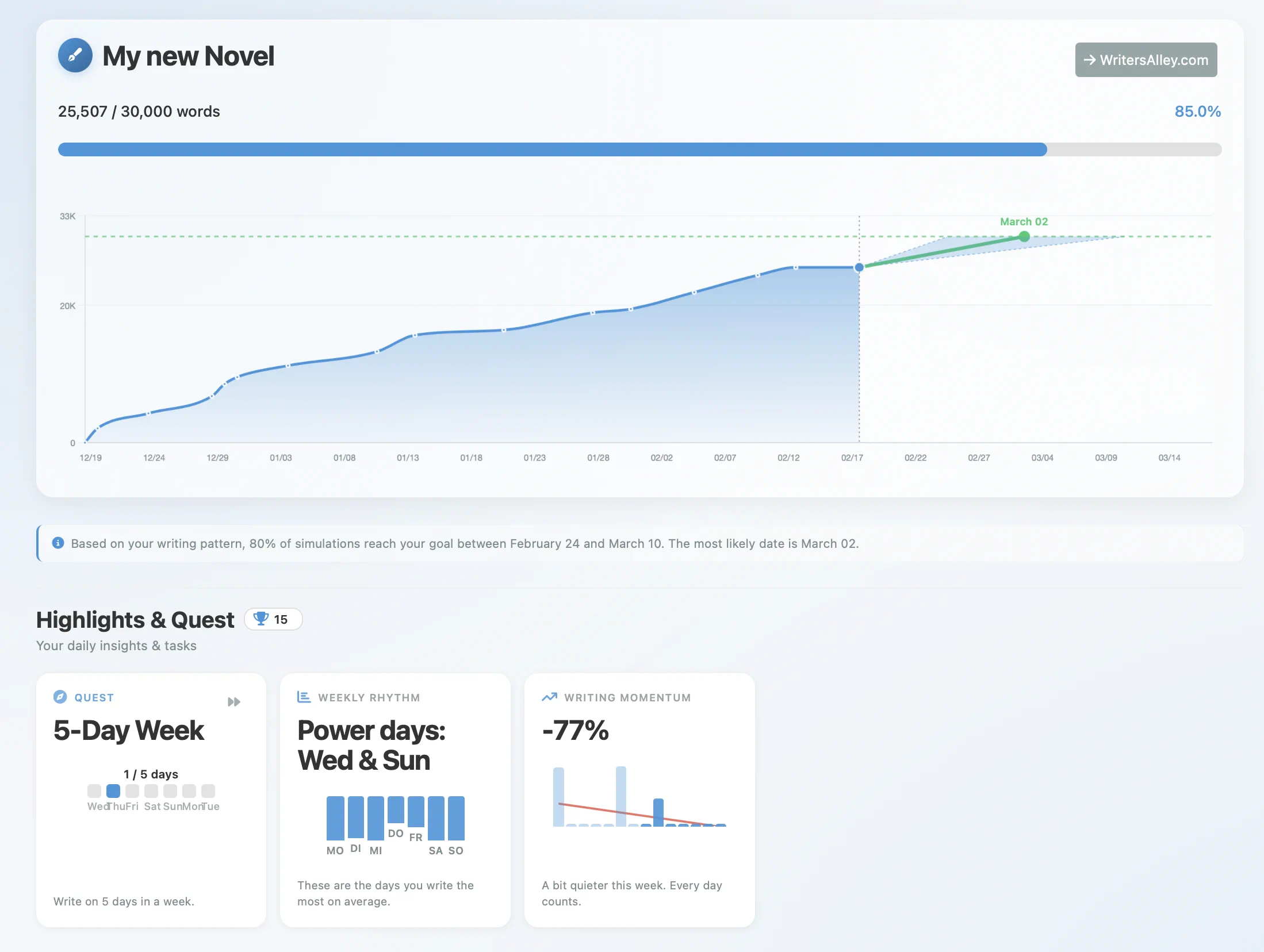
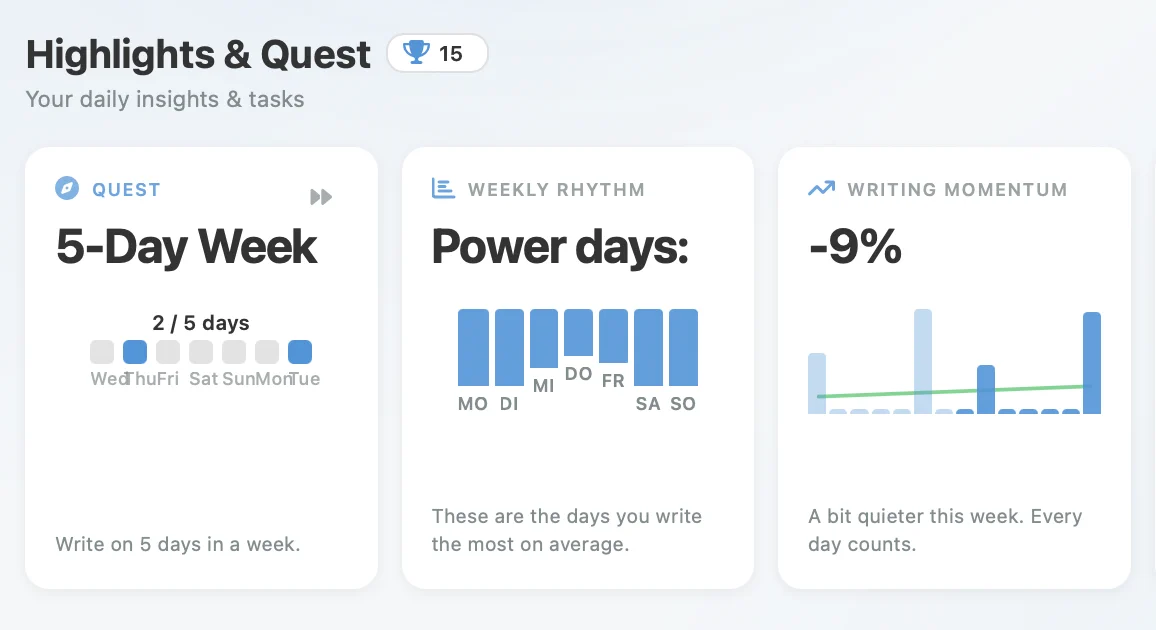
WritersAlley is built around project-based progress tracking: you create a project with a target, log entries by date, and get an always-updated chart for total progress versus goal. It also adds practical motivation layers like highlights, quests, and customizable stat cards, so daily tracking feels clear instead of overwhelming.
- Pros: Fast project setup, simple entry logging, strong visual progress chart, useful highlight and quest cues.
- Cons: Not a full manuscript editor.
If your goal is consistency first, you can get started with WritersAlley in under a minute and create your first project right away: Start with WritersAlley.
2. TrackBear
TrackBear remains a favorite for writers who care about privacy and flexibility. You can track words, chapters, pages, or editing time, making it useful across very different writing workflows.
- Pros: Free, supports multiple project types, collaborative leaderboards.
- Cons: No built-in editor, interface is intentionally minimal.
3. Novlr
Novlr combines a full writing environment with advanced productivity analytics. Its time-of-day productivity insights are especially useful if you are trying to design a stable schedule around writing sessions.
- Pros: Deep productivity analytics, smooth cloud syncing.
- Cons: Monthly subscription, can feel heavy if you only need tracking.
4. Pacemaker
For long-term planners, Pacemaker is still one of the most powerful options. It lets you model writing roadmaps with highly customized workload curves.
- Pros: Excellent flexibility in goal setting, strong long-term visualization.
- Cons: Steeper learning curve, interface can feel clinical.
Writing Trackers 2026 Comparison Table
| Tool | Best For | Core Focus | Price Tier |
|---|---|---|---|
| WritersAlley | Habit Building | Project Progress and Habit Cues | Free / Premium |
| TrackBear | Privacy and Groups | Versatile Progress | Free |
| Novlr | Full Manuscript Flow | Productivity Patterns | Subscription |
| Pacemaker | Complex Planning | Custom Workloads | Freemium |
Which tracker should you choose?
If you want a low-friction tracker that keeps momentum high, WritersAlley is the fastest path from intention to action. If you need intense planning controls, Pacemaker can be the better fit. The key is choosing the interface that helps you return tomorrow.
Related Guides
- Best Tools for Writing a Novel in 2026
- 5 Best Apps to Track Word Count and Writing Progress in 2026
- Best NaNoWriMo Alternatives 2026
FAQ
Is WritersAlley only for novel writers?
No. WritersAlley works for any writing project where you want to set a goal, log sessions, and stay consistent.
Can I start WritersAlley for free?
Yes. WritersAlley has a free entry point so writers can create a project and begin tracking immediately.
What makes WritersAlley different from basic word counters?
WritersAlley combines word tracking with project goals, progress visuals, quest-like motivation, and consistency-focused insights.
Want to test your own writing rhythm today? Get started with WritersAlley now and log your first session immediately.